Start here
The poem
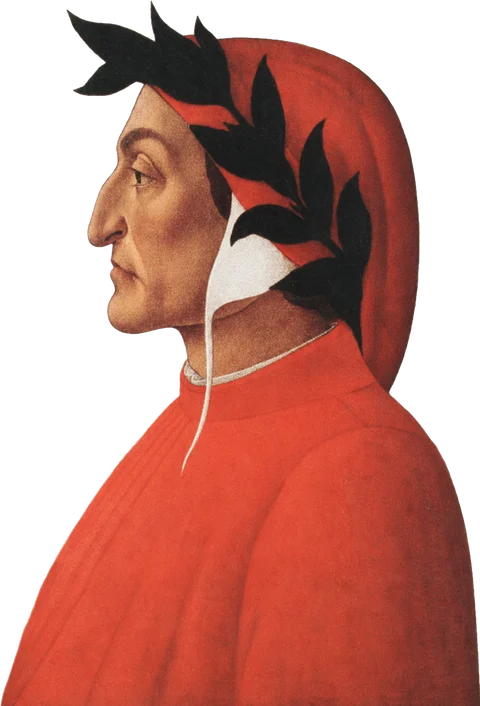 After Sandro Botticelli, c. 1495The Divine Comedy is an epic poem by Dante Alighieri of Florence, and one of the greatest works of art ever made. He wrote it in exile, banished from his city for life, and finished it shortly before he died in 1321. Instead of Latin, the language of scholars, he chose the everyday Italian of his city, so that anyone could read it. It tells the story of one journey, and the traveler is Dante himself. Lost in the middle of his life, he passes through the three realms of the dead: down through Hell, up the mountain of Purgatory, and out through the heavens of Paradise. The Roman poet Virgil guides him through the first two, and Beatrice, the woman he loved, leads him through the last.
Along the way he stops to talk with the dead: lovers, thieves, saints and kings. They tell him who they were and how they came to be there.
The poem has one hundred short chapters called cantos, in three parts. Inferno has thirty-four, the first of them an introduction to the whole poem, and Purgatorio and Paradiso have thirty-three each. All three parts end on the same word: stars.
Dante called it a comedy because it begins in misery and ends in joy. Hell is the most famous part, and many readers stop there. But if you read only the Inferno, you turn a comedy into a tragedy. The journey is meant to be taken all the way to the stars.
A way through
For all its greatness, the Comedy can be hard to approach. It is seven hundred years old, and crowded with popes, poets and Florentine politicians whose names once needed no explaining. Dante wrote in the language of his own day, and this site is made in the same spirit. It is here to help you read the poem all the way through, and enjoy it.
The words are plain modern English, rewritten line by line from Longfellow's translation of 1867. Every canto is read aloud, and each character speaks in a voice of their own. Notes on every canto explain the names and references. Gustave Doré's engravings from the 1860s appear in color beside the lines they picture, and all 135 are on the Illustrations page. The Map shows the whole journey, and each canto's page shows where you are on it.
Reading and listening
On a canto's page, press play at the bottom to hear it. A canto takes about six minutes, and the whole poem about ten and a half hours. The words light up as they are spoken, and you can click or tap any word to listen from there. If you would like to know what happens first, press Canto summary at the top for the story in about a minute. To see the notes, turn on the Annotations switch.
Where to begin
You don't need to know anything before you start. Begin with the first canto of Inferno, where Dante wakes in a dark wood.
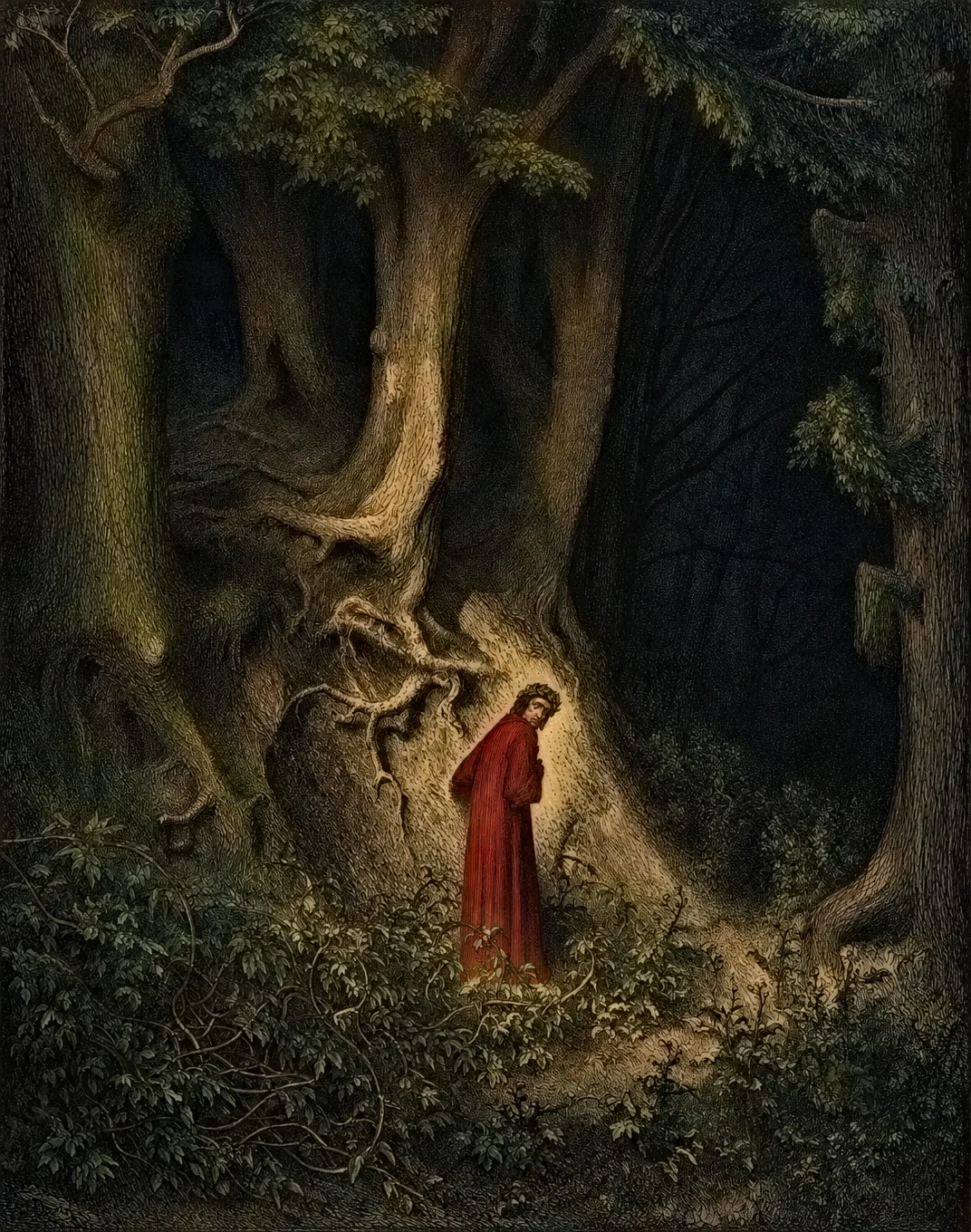 Inferno, Canto IBegin reading
Or look around first: the Map of the journey, and the Illustrations.